
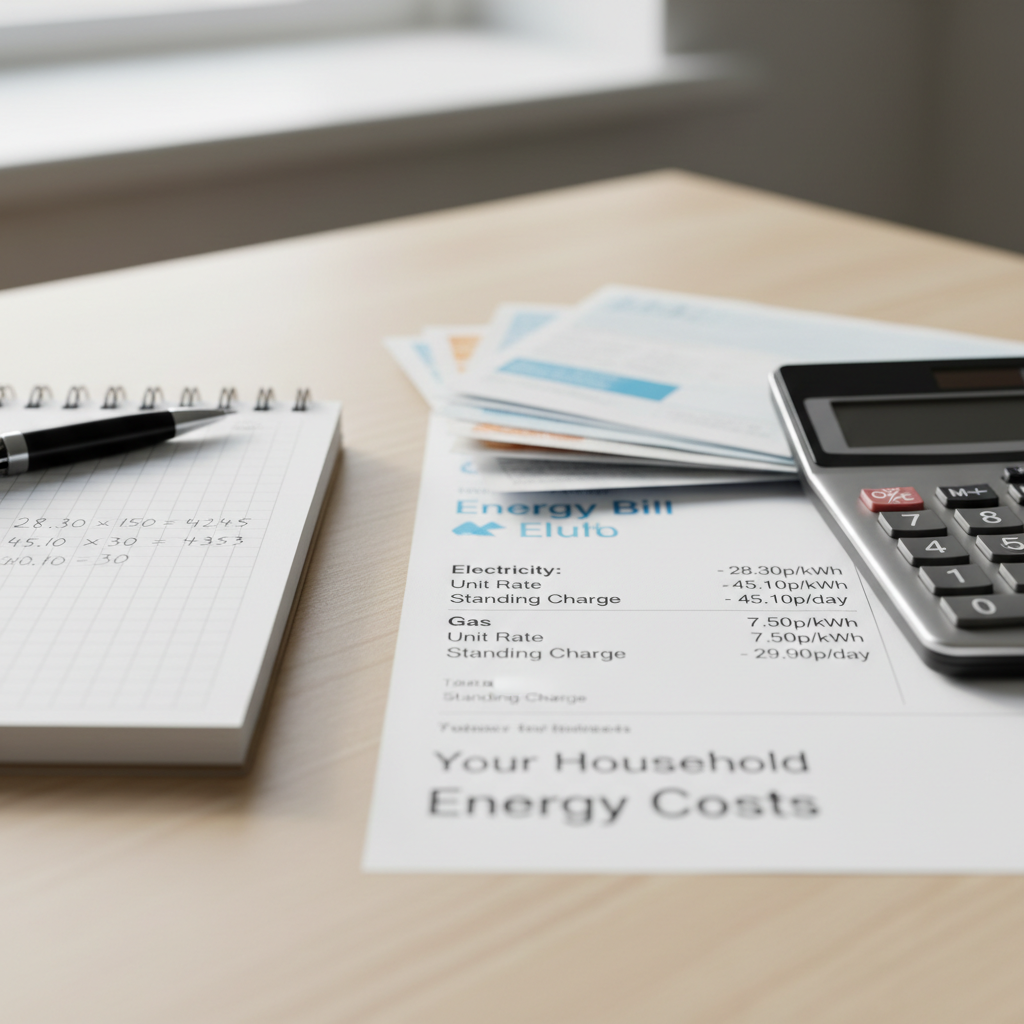

With dozens of energy suppliers and hundreds of tariffs available in the UK, finding the genuinely cheapest deal for your household requires a bit more than a quick price comparison. Here’s the systematic approach that actually works.
Step 1: Know Your Actual Usage
Before you can compare deals properly, you need to know how much energy your household uses annually. You’ll find this on your energy bill — look for your annual kWh figure for both electricity and gas. If you’ve recently moved or can’t find a bill, your smart meter’s in-home display or your supplier’s app will have this data.
Don’t rely on “average household” estimates — a two-person flat uses dramatically different amounts to a five-bedroom house with an EV charger.
Step 2: Use an Ofgem-Accredited Comparison Site
Comparison sites accredited under Ofgem’s Confidence Code are required to show the full market and rank results by actual cost (not commission). Enter your real usage figures, your postcode, and your current tariff details. The results should show your estimated annual cost with each option — not just the unit rate.
Popular accredited comparison sites include Uswitch, MoneySuperMarket, and the Ofgem’s own comparison tool.
Step 3: Factor In the Standing Charge
A tariff with a very low unit rate but a high daily standing charge can end up costing more overall than one with a slightly higher unit rate and lower standing charge. Always look at the total estimated annual cost, not individual components.
Step 4: Consider Fixed vs Variable
Fixed tariffs lock in your unit rate for a set period (usually 12–24 months), protecting you from price rises. Variable tariffs track the market — they can fall, but they can also rise. In a stable or falling market, variable can work out cheaper. In a rising market, fixed offers certainty.
If you’re risk-averse or budgeting carefully, a fixed deal gives predictability. Just check the exit fee before committing.
Step 5: Check the Supplier’s Reputation
Price is important, but so is service. A supplier with the cheapest rates but a reputation for billing errors, poor customer service, or financial instability may not be worth the saving. Check Trustpilot and Which? reviews for any supplier you’re considering, particularly newer ones.
Step 6: Switch — and Diarise a Reminder
Once you’ve found the right deal, switching is straightforward — the new supplier handles the process. The whole thing typically takes 2–3 weeks and you won’t experience any interruption to your supply.
Set a reminder for two months before your fixed deal ends so you can compare again before you roll onto a standard variable rate.
Ready to cut your energy costs? Compare deals today and see how much you could save.



0 Comments